
Asteroid Mining and Avoiding the Repetition of History
Major Cody J. Long, U.S. Space Force
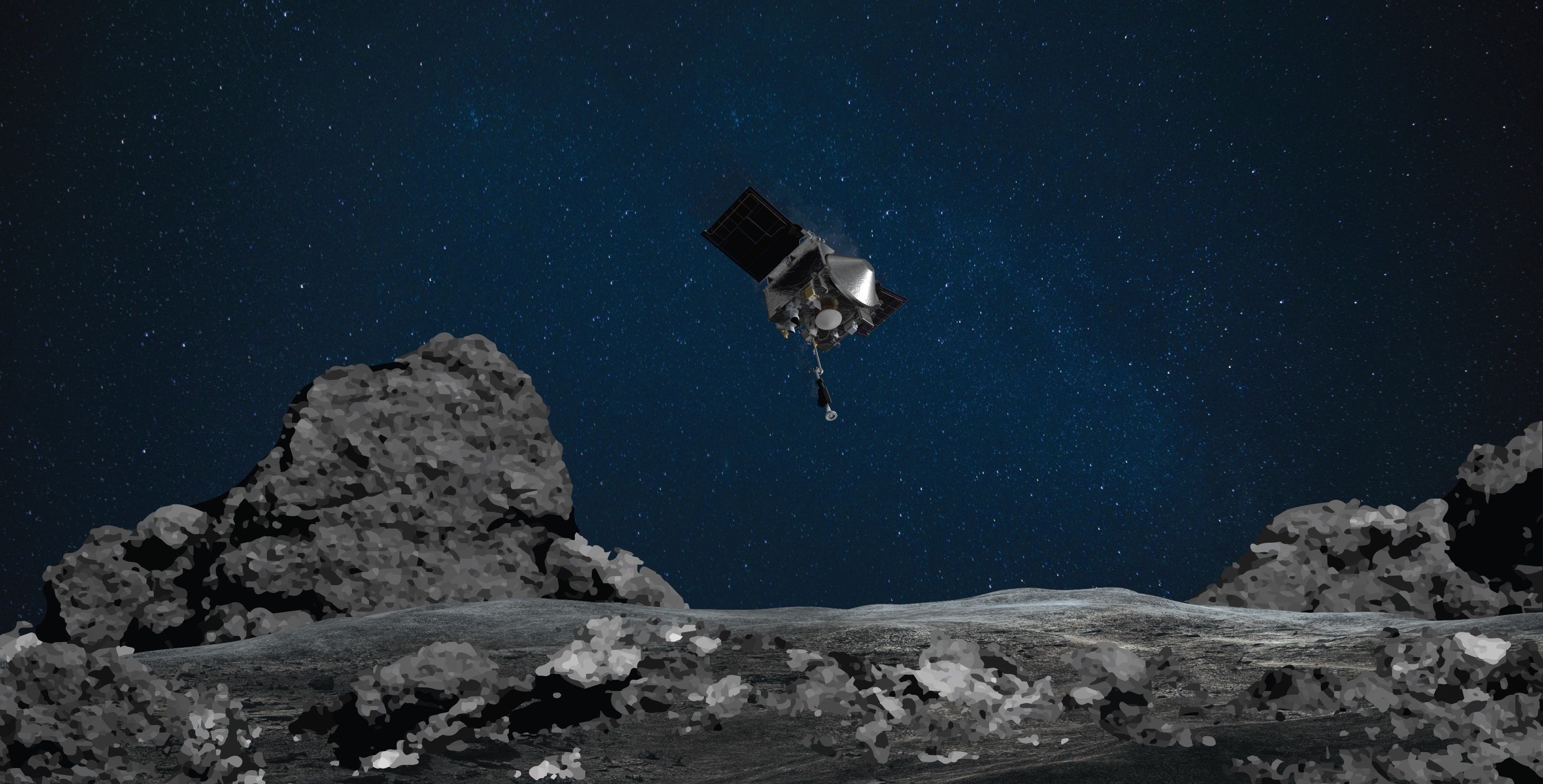
Editor’s Note: Major Long’s thesis won the 2025 FAOA Award for Academic Excellence in International Affairs at the U.S. Marine Corps Command and Staff College. Because of its length, we publish without research notes. To see the complete thesis, please contact editor@faoa.org. The Journal is pleased to bring you this outstanding scholarship.
Disclaimer: The opinions and conclusions expressed herein are those of the individual student author and do not necessarily represent the views of either the Marine Corps Command and Staff College or any other governmental agency. References to this study should include the foregoing statement. Quotation from, abstraction from, or reproduction of all or any part of this document is permitted provided proper acknowledgement is made.
Executive Summary
Thesis: As an enterprise, asteroid mining is closer than widely understood. Resource competition in space is imminent, and it is incumbent on humanity to do better than has been historically proven, where competition has birthed devastating conflict.
Discussion: The advent of the second space race and the resulting burgeoning space economy and technology have brought human technology significantly closer to making the exploitation of vast asteroid resources attainable. The amount of wealth represented by the resources found in M-type asteroids is significant. 16Psyche, a 140-mile mean diameter asteroid, is assessed at $10,000 Quadrillion. If harvested, the five closest and most easily exploitable asteroids would generate $2 trillion in profit. If exploited by a small number of companies, this wealth would represent a scale of power that eclipses even that of the English East India Company. At the height of its power, the EIC commanded an army of 200,000 soldiers, larger than the army of England. Moreover, at that point, it had conquered empires and kingdoms on the Indian peninsula. Running independent of governmental oversight, the EIC effectively started England’s Imperial expansion and was responsible for hundreds of thousands of deaths.
Conclusion: It is incumbent on humanity to do better than what the past represents. Approaching this burgeoning space economy by fostering competition and distributing capabilities through a program similar to the U.N.’s International Seabed Authority would both help stabilize the economy and mitigate the impacts on resource-dependent nations. The international world order would effectively reduce the damage these entities could incur by ensuring that the wealth represented by asteroid mining is not consolidated within a handful of companies.
Introduction
As long as human space travel has pervaded popular culture and science fiction, asteroid mining has found its niche alongside it. In their novel series, The Expanse, popular author James S.A. Corey describes asteroid mining in the far-flung future, where men and women wear space suits and extract ore in microgravity and the vacuum of space.1 This characterization reinforces the notion that asteroid mining is purely science fiction and well beyond what can be achieved in the near future. However, unlike these stories, asteroid mining will not begin with colonies of miners harvesting ore. It will be done by purpose-built satellites designed to assess, mine, and refine ores where the asteroids exist in orbit.
Recent technological developments are making this endeavor more accessible. The second space race has reduced the risk of investing in new space capabilities. New Space Launch Vehicles (SLVs) reduce the cost of putting objects into orbit. Efforts to increase lifespan and perform repairs on satellites in orbit further improve cost-effectiveness. The burgeoning space economy and proliferation of satellites in orbital regimes drive the need for a method to safely and precisely de-orbit objects in space. The legal framework for establishing claims on extracted resources has been established within the last decade. Then, there is the goal: ores mined from asteroids. Metal-type (M-type) asteroids are primarily composed of metal and can contain elements such as cobalt, nickel, platinum-group elements, rare-earth elements, and other valuable ores.2 Multiple private companies actively invest in, develop, and test the technology necessary to make extracting the ore viable.
The threat lies in the profit and potential power that a single private company could wield if it were able to implement these technologies sufficiently ahead of its competitors. History provides numerous examples of the damage that a company with such power can inflict. The British East India Company (EIC) is one such example. At the height of its power, the EIC toppled one of the largest empires, repressed nearly an entire subcontinent, and maintained a standing army twice the size of Britain’s.3 It accomplished all of this and was valued at £12 million, equivalent to approximately £ 1 billion today.4 This paper will first seek to establish the feasibility of satellite-based asteroid mining in the near future and, through comparison with the British East India Company, provide an assessment of the potential danger it poses if dominated by a small number of private companies. The intent is to highlight the looming threat that resource competition in space is imminent, and it is incumbent upon humanity to do better than it has historically, where competition has often given rise to devastating conflict.
Feasibility of Asteroid Mining
On December 21, 2015, Space Exploration Technologies Corporation (SpaceX) successfully re-entered and landed the rocket body of its Falcon 9 SLV at Cape Canaveral, Florida, after delivering its payload into orbit.5 This had never been accomplished before, representing a significant breakthrough in the accessibility of the space domain. Two short years later, SpaceX used one of its previously recovered Falcon 9 rockets to deliver a payload to orbit, proving the viability of its SLV recycling system.6
Up to that point, rocket bodies were considered sunk cost and not recoverable, either left in orbit to re-enter later or dropped in the ocean.7 When placing an object into orbit, the weight- to-fuel ratio is the most restrictive element, and the cost of an SLV launch is measured in dollars per kilogram.8 Until its retirement in 2011, the US Space Shuttle was the primary method for putting US astronauts and other delicate payloads into space.9 The cost per launch of the Space Shuttle to Low Earth Orbit (LEO) was a staggering $1.5 billion at $54.5 thousand per kilogram.10 Comparatively, SpaceX’s Falcon 9 SLV with Dragon Capsule can place a payload into LEO at a cost of $62 million per launch and $2.7 thousand per kilogram.11 This makes the SpaceX Falcon 9 twenty times cheaper than the Space Shuttle. This is still markedly cheaper than the cost incurred by the second- and third-largest space-faring nations, China and Russia, both of which are noted for being heavily subsidized by their respective states. The Chinese Long March 3B SLV can launch for $ 6.3 thousand per kilogram, while Russia’s Soyuz SLV costs $ 7.6 thousand per kilogram.12
The dramatic increase in the cost efficiency of putting payloads into orbit sparked a resurgence of advances in space, reducing the need to optimize every bit of weight in spacecraft design.13 The ability of SpaceX to field its Starlink constellations is a prime example of what increased cost efficiency has enabled. The cost per satellite launched is significantly reduced, allowing the use of cheaper satellites, costing $200 thousand a piece, that can be delivered in launches of sixty satellites each.14 This same concept could easily be applied to any asteroid- mining satellites, dramatically increasing the potential profit margin and removing the most significant cost-prohibitive aspects of developing new space technologies. Once a space-mining spacecraft has successfully been delivered to orbit, further advancements can increase the cost efficiency of the endeavor, such as extending the craft’s lifespan.
Additional near-future advances are poised to reduce the overall cost of space launches and increase accessibility. To date, placing a satellite into orbit is done with the knowledge that the spacecraft is being launched with all the redundancies and fuel necessary to execute its entire lifespan and mission.15 This is due to the risk of catastrophic repercussions should satellites ever collide at high speed. Objects in LEO move at an average of 20 thousand kilometers per hour, and collisions typically result in clouds of hundreds to thousands of debris pieces moving at the same speed, spreading out of control.16 However, over the last two decades, multiple entities, including the US National Aeronautics and Space Administration (NASA) and the Defense Advanced Research Projects Agency (DARPA), have invested significant resources in developing In-space Servicing, Assembly, and Manufacturing (ISAM) technology.17
ISAM is designed to accomplish on-orbit rendezvous operations with satellites and to perform refueling, repair, and retrofit operations, dramatically extending the craft’s mission longevity and lifespan.18 In late 2020, the US government developed and invested in the On- orbit Servicing, Assembly, and Manufacturing (OSAM) initiative to promote further domestic government and commercial development of ISAM technology.19 Existing programs, such as DARPA’s Robotic Servicing of Geosynchronous Satellites (RSGS), are expected to continue conducting demonstrations throughout the 2020s and achieve the first significant viability testing and Initial Operational Capability (IOC) in the mid-to-late 2030s.20 Once fully developed and integrated, ISAM would provide the equivalent of a gas and repair service station capable of tripling the life expectancy of a satellite.21 Such a dramatic increase in the cost efficiency of a satellite represents another substantial boost to space accessibility, reducing the risk associated with investing in space mining technologies. However, once a spacecraft can successfully extract ore and return it to Earth’s orbit, to capitalize on the refuel and refit stations, it would need to transfer the process of delivering the payload to the planet’s surface to another capability that can do so without risking profit or population centers.
A key consideration in asteroid mining is how to transport any extracted ore to Earth’s surface. An object re-entering the Earth’s atmosphere is subjected to significant friction as it travels at orbital speed and transitions from a near-vacuum to an atmosphere with closely packed air molecules.22 The friction generates so much heat that most objects weighing less than one thousand kilograms will likely be burned up before reaching the ground.23 To this end, delivering ore to the surface will require a method capable of significant precision to both minimize friction and ensure the payload impacts where it can be recovered without endangering human populations.24
In June 2024, NASA awarded SpaceX the $843 million contract for building the de-orbit vehicle responsible for safely de-orbiting the International Space Station (ISS).25 The spacecraft will be responsible for de-orbiting the 925,000-pound spacecraft, which measures 218 feet in length and 310 feet in width, across its solar arrays.26 The ISS’s size, complexity, and composition make this a highly complex task, where ensuring the surviving debris drops within the targeted region requires precision and rapid calculations.27 When applied to delivering refined ore to the Earth’s surface, this technology would maintain compositional integrity and avoid risk to human life. However, a substantial incentive would be necessary to drive commercial entities to achieve such significant technological advances and make them worthwhile.
Having established the current and near-term cost-reducing technologies that increase the feasibility of investing in new space technologies, it is crucial to understand the potential gains that drive investors to accept the risks associated with commercial investment in new space technologies. As previously stated, M-type asteroids are predominantly composed of metal with silicate impurities, where the distribution of valuable ores, such as platinum group elements, rare earth elements (REE), cobalt, and gold, is even throughout the metal body, likely iron or nickel.28 The prime example of the potential value M-type asteroids represent is 16 Psyche, assessed at $10,000 quadrillion.29 16 Psyche has a mean diameter of 140 miles.30 It is in a solar orbit between Mars and Jupiter, approximately 200 to 300 million miles from Earth, depending on where its orbital position is relative to Earth’s orbit.31 Initial scans by NASA suggest that it may be the remnant core of a failed protoplanet and could contain as much as 60% metallic ore.32 Initial Ultraviolet and Infrared scans of the asteroid indicate that it is predominantly composed of iron, with nickel being the next most prominent element.33
Interested in further researching its potential origins as a protoplanetary core, NASA launched the spacecraft Psyche on October 13, 2023, with the intended mission of conducting close-proximity scans of 16 Psyche to determine its elemental composition in greater detail and discover what may have prevented its formation into a protoplanet.34 Planetary scientist Dr. Lindy Elkins-Tanton of Arizona State University is one of the leads for this mission and is credited with calculating the asteroid’s value based solely on the assessed iron content.35 While 16 Psyche represents an order of magnitude greater value than Earth’s 2023 Gross Domestic Product (GDP), $106 trillion, the distance, travel time, and subsequent transmission time for any control of spacecraft places it outside the realm of near-term feasibility and more of a target for an existing and robust asteroid mining economy.36 For reference, NASA’s Psyche spacecraft is not scheduled to reach 16 Psyche until late 2029, roughly 6 years after the initial launch.37 While some of this time accounts for the necessary maneuvers to place it in a long-term observational orbit around the asteroid, there is still significant risk associated with those travel times.38
The Asterank database identifies the asteroids most readily accessible for exploitation and, through a review of composite research data, determines the relative value and potential profit of identified and studied targets.39 From this compiled data, the estimated profit from harvesting the ten most readily accessible M-type asteroids is over $2 trillion, which exceeds Russia’s entire 2020 GDP.40 The asteroid Anteros alone is assessed as yielding a potential profit of $1.25 trillion and is, compared to 16 Psyche, significantly closer at 5.53 million miles distant.41 As resources that are ripe for exploitation and have little to no potential to damage the environment in the same way that current terrestrial mining does, asteroids represent both a viable and far less restrictive source. It has the benefit of leaving any waste or toxic materials in orbit rather than contaminating water supplies—a common hazard of terrestrial mining operations.42 To this end, the advent of asteroid mining presents an opportunity for a significant new resource supply, one that is free from the current environmental risks. It provides a repository of multiple rare elements that are otherwise scarce.
The United States should be interested in the potential for substantial REE deposits in asteroids. REE refers to a group of 17 elements critical to the development of electronics and feature heavily in microprocessors, which are integral to missiles and other defense technologies.43 REEs are also heavily utilized in green technologies and electric vehicles (EVs).44 Elements like Neodymium are key to the magnets used in EVs and their batteries.45 It should be of interest because, as of January 2024, the People’s Republic of China (PRC) controls approximately 60% of the global REE mining production.46 The PRC also conducts 90% of global REE refinement for use in production and 90% of converting REEs into magnets.47 In addition, as of December 2023, the PRC has banned the exportation of multiple refined elements and all of the refinement and magnetization technologies.48 All of these represent a move to monopolize the global supply of refined, manufacturing-ready REEs.
Exploiting new sources of REEs would provide a significant windfall to continue supplying domestic production and avoid an inflated market that a monopoly would represent. Avoiding a monopoly on subcomponent production would enable the United States to mitigate security concerns related to manufacturing technology for national security missions. The high value of REEs and other rare metals, such as platinum group elements, are among the many targeted goals of the various companies developing asteroid mining technologies.
One of the most restrictive time considerations for any burgeoning space technology is the development and testing phase, given the requirement for multiple iterations and the associated costs and long lead times involved in transferring a test spacecraft to orbit.49 To date, several companies have developed and initiated testing of methods and equipment for extracting asteroid ore, with only a few having accomplished on-orbit testing. A notable example is AstroForge, a California-based private company that aims to extract cobalt, nickel, and platinum group metals for use in green energy technologies.50 AstroForge is notable for having made significant progress in developing a method and its supporting technology for extracting and refining ore on location in microgravity. While still a proprietary technology for which they have not shared specifics, this method is groundbreaking in determining a way to disperse massive amounts of heat, which is notoriously challenging in a near vacuum.51 This method significantly reduces fuel costs by eliminating the need to haul back waste material that would otherwise be disposed of after delivery. In April 2023, they launched their first complete test satellite, Brokkr-1, which, according to their account, successfully tested their equipment under solar power.52 AstroForge has already identified a test M-type asteroid intended for target acquisition and live testing.53 Brokkr-2 is scheduled to launch in early 2025 to test the system’s deep space command and control capabilities while executing a flyby and scan of its target asteroid, which will be used for future testing phases.54 In October 2025, AstroForge’s Vestri spacecraft will conduct an assessment mission to the target asteroid, determining its relative material quality.55
While AstroForge is the furthest along in developing viable asteroid-mining spacecraft, others are also making strides. Trans Astronautica Corp (TransAstra), another California-based company, remains predominantly in the technology development stage, focusing on processes with a broader range of applications.56 Its focus is on the continued development of four key capabilities: advanced optics, maneuver, capture, and process.57 Their advanced optics, Sutter, are designed to assess asteroids rapidly for their elemental composition while maximizing the use of commercial off-the-shelf components.58 The maneuver capability is provided by a proprietary propulsion engine named Omnivore, which can utilize any available volatile liquid, including water extracted from asteroids, in addition to ore, thereby limiting the requirements to stage refueling points or even lifting it into orbit.59 TransAstra’s capture method is the Flytrap, a net capture capability. While it is less efficient than on-location refinement, it has a broader application in reducing or eliminating orbital debris that poses a risk to other spacecraft.60 TransAstra is pioneering Optical Mining technology, utilizing focused sunlight to reduce and refine ore, with the added application of reducing orbital debris to base elements, which can enable easier orbital plane clearing in the event of satellite breakups.61 TransAstra’s technological developments are notable for their marketability in the near-Earth space economy, which would allow them to generate revenue during testing and demonstrations, thereby subsidizing the research and development required for asteroid mining applications.
The last company of note is Asteroid Mining Corporation Limited. They are a London- based company developing the Space Capable Asteroid Robotic Explorer (SCAR-E) in collaboration with the Japanese Tohoku University Space Robotics Lab. 62 Asteroid Mining Corp. Ltd. seeks to employ SCAR-E by landing it on an asteroid or the lunar surface, thereby accessing previously inaccessible locations.63 These three companies all demonstrate having taken significant strides in developing actionable methods for exploiting asteroids as a source of metallic ore. Moreover, their breadth and variety of techniques and technologies promise greater potential for achieving optimal results. One of the more significant risks accepted by commercial entities developing these technologies is the relatively loose level of legislation and regulation within the space domain.
Outer space and how the international order regulates behavior therein is unique compared to any other regime. Where borders define terrestrial sovereignty for nations and crossing them constitutes a clear violation, the nature of how objects remain in orbit requires what is known as an orbital overpass, which by its nature means that it cannot be restricted to terrestrial territorial boundaries.64 Between this and the fact that space exploration began as an extension of the Cold War, International Law for the governance of outer space is vague.65 It often utilizes terms without a commonly agreed-upon definition, such as the “Common Heritage of All Mankind” found in both the 1967 Outer Space Treaty (OST) and the 1979 Moon Treaty.66 The Treaty on Principles Governing the Activities of States in the Exploration and Use of Outer Space, including the Moon and Other Celestial Bodies, also known as the 1967 Outer Space Treaty, is the foundational document governing conduct in outer space and establishes the basis for nearly all subsequent treaties.67 The OST, comprising seventeen articles, heavily focuses on the freedom of space and celestial bodies for scientific exploration, as well as its prohibition on nations placing a sovereign claim on regions of space or other celestial bodies, such as the moon.68 Additionally, the most pressing issue at the time was Article IV, which prohibits placing nuclear weapons and all other weapons of mass destruction into orbit around Earth or on any other celestial body.69
While the OST initially had only three signatories—the United States of America, the Union of Soviet Socialist Republics (currently referred to hereafter as the Russian Federation), and the United Kingdom—all major space-faring nations are currently parties to the treaty.70 Though the Treaty provides the provisional groundwork for cooperative endeavors like the ISS through Articles V and XII, which identify astronauts as peaceful envoys and establish freedom of access to spacecraft and installations in concrete language, respectively, it fails to provide the same specificity to its prohibitive language.71 Language like weapons of mass destruction does not include any list or even basic examples of what constitutes a WMD. Moreover, using the language “Parties to the Treaty undertake not to place in orbit around the Earth any objects carrying nuclear weapons” does not restrict the use of Inter Continental Ballistic Missiles, given that these missiles never complete a full orbit and are therefore sub-orbital.72
Recognizing the loopholes in the OST and with the intention of establishing all space exploration for scientific purposes, a contingent of nations in 1979 established the Agreement Governing the Activities of States on the Moon and Other Celestial Bodies, colloquially referred to hereafter as the Moon Treaty.73 The Moon Treaty reinforced the “Common Heritage of Mankind” language, aiming to prevent the commercial exploitation of the Moon’s resources and those of other celestial bodies through Article XI, which states, “The Moon and its natural resources are the common heritage of mankind…Neither the surface … nor any part thereof or natural resources in place, shall become property of any State, international intergovernmental or non-governmental organization, national organization or non-governmental entity or of any natural person.”74 The US, in particular, recognized that the commercialization and advancement of space exploration would heavily rely on the incentivization associated with mineral rights and exploitation.75 To this end, the US, Russia, and China all abstained from participating in the treaty. To date, only 18 nations have become signatories, with one signatory, Saudi Arabia, withdrawing in 2023.76
The United States has taken further steps to establish a legal framework for incentivizing space mining. In 2015, the US Congress passed the Space Resource Exploration and Utilization Act.77 This law states, “any asteroid resources obtained in outer space are the property of the entity that obtained such resources, which shall be entitled to all property rights thereto…” establishing a legal basis for commercial entities to lay claim to any resources extracted from asteroids without violating the OST’s prohibition on laying sovereign claim to said celestial body.78 Even to the extent that these laws establish the legal framework for the behavior and exploitation of outer space and its collective resources, this framework is only viable so long as it is enforceable and signatories abide by it. The solidity of these regulations is belied by Russia’s recent activities, where they are suspected of placing a nuclear warhead in orbit, which is a direct violation of the most critical article of the foundation of outer space law.79 Having established both the feasibility and proximity of asteroid mining, it is now imperative to properly guide it as an economic enterprise. This paper seeks to draw parallels between an asteroid mining company and the British EIC by comparing the relative power and potential for havoc wrought in East Asia in the 16th century to what may lie ahead in space.
A Comparative Analysis
From its birth in London’s Founders Hall in 1599, the EIC made history as the first-ever Joint Stock Company and, until its dissolution in 1878, “grew to control almost half of the world’s trade” at the height of its power.80 The EIC was founded with the intention of breaking into the empire-building game in which the Spanish and Portuguese had achieved considerable success in the Americas.81 Moreover, the English were in dire need of foreign ports to trade with after the formation of the Church of England alienated England from its Catholic neighbors.82
To this end, Queen Elizabeth I granted the company a monopoly on English trade in the East Indies.83 Setting out in 1602 with four ships, the EIC’s first voyage returned with a wealth of spices and was considered a dramatic success.84 The EIC continued in this vein for some decades, establishing trading hubs and regions of control within the Indian subcontinent to trade with the various kingdoms there.85 However, by the end of the seventeenth century, the EIC had begun to exert an outsized influence on English society due to its dynamic trade practices, which had grown beyond spices and expanded into textiles and various other products.86 Its influence spread, and its in-country administrators often took action in direct opposition to their home nation’s directions.87 By the mid-1750s, the EIC’s production had expanded to include gunpowder and artillery pieces, marking a shift toward militarization over trade.88 In 1766, the EIC viewed the building conflict between the multiple kingdoms occupying the Indian peninsula as a direct threat to their business and the organization.89 Over the next five decades, the EIC conducted a series of military campaigns to gain complete control over the lands encompassing its trade routes.90 By the fall of 1803, the company managed to push both the French and Dutch East India Companies out of the subcontinent and maintain brutal control over the population of nearly 200 million for the next fifty years.91 By 1859, the British parliament could no longer ignore the EIC’s brutal conduct in administering the colony and revoked its governorship, absorbing all of its holdings on the peninsula under the ownership of the Crown.92 Thus, the company was relegated to obscurity until its final bankruptcy and dissolution in 1876.93 During its almost 300-year existence, the EIC would turn Britain from a primarily agricultural economy into an industrial powerhouse, flooding its market with the raw resources, produced goods, and capital necessary to drive a premier colonial empire.94 However, during that same period, it perpetuated its existence by conflict with trade competitors, conquering multiple kingdoms in the Indian subcontinent and pushing all French and Dutch trade from the peninsula.95
Before its move to militarization, the British EIC had two primary trade rivals on the Indian subcontinent. The French East India Company, Compagnie Francaise des Indes Orientales (CFIO), and the Dutch East India Company, Vereenigde Oost-Indische Compagnie (VOC).96 The EIC differed dramatically from the CFIO and VOC in establishing trade locations. Where the VOC and Portuguese used military force to occupy existing commercial trade locations, the EIC operated from places where they were invited by the regional government to build and occupy settlements, establishing a vast network of decentralized nodes.97 The CFIO is a misnomer, as it refers to a long line of different companies operating on the French Crown’s behalf, rather than a singular company that lasted very long.98 The CFIO was under the direct authority of the French Crown, and its forays into actual trade were often brief and interspersed with its more frequent endeavors to establish French colonies, many of which also failed, notably multiple attempts on Madagascar.99 Regarding its relationship with the EIC, this means the CFIO often conducted itself with the intention of opposing the EIC rather than surpassing it in the conduct of trade.100 This was to such an extent that when operatives in England observed a fleet of CFIO ships being loaded with soldiers in 1756, they warned the EIC base of operations in Calcutta that an attack was imminent.101 Moreover, the French often found themselves backing factions within India’s Mughal empire because they were direct rivals of the EIC-backed factions.102 This most notably occurred during the Carnatic Wars and the Battle of Delhi, the latter of which ended with the EIC victory that cemented their control of all of India south of Delhi.103
The VOC followed a path similar to the EIC, as both were long-lived, singular companies focused on commercial success.104 The VOC, by contrast, integrated military might and conquest early into their model by targeting and seizing existing Portuguese trade hubs to achieve a true monopoly over the spice trade flowing from East Asia.105 However, the relationship between the EIC and VOC was much more nuanced, varying widely between direct conflicts, such as when the EIC forced VOC out of India to focus on their holdings in East Asia, to when they opted to overlook that their parent nations were at war in favor of continuing trade in the East, such as during the second (1655-1667) and third (1672-1674) Anglo-Dutch Wars.106 This reinforces the notion that the VOC and EIC were far more similar than the EIC and CFIO, given the VOC and EIC were driven by commercial enterprise rather than conflict between nations. The most notable and enduring altercation between the EIC and VOC was the Amboyna Conspiracy. In 1623, on the spice trade island of Amboyna, an investigation by the Dutch governor into the reason for suspicious questions regarding the defenses of a nearby VOC-held island ultimately resulted in the arrest, interrogation, torture, improvised tribunal, and public execution of 21 conspirators.107 The coerced confessions revealed an extensive conspiracy to seize a critical fortification to wrest control of the valuable Amboyna spice trade, particularly in cloves.108 The executed conspirators included 10 English merchants, 10 Japanese soldiers, and the Portuguese slave overseer.109 These events sparked outrage in London and initiated a prolonged series of escalating friction between Britain and the Netherlands, culminating in trade tensions and ultimately leading to the three Anglo-Dutch Wars, all of which were primarily naval conflicts over trade and competition for markets in the East, albeit to varying degrees.110 The Anglo- Dutch wars spilled over into conflicts in India and continued until the VOC, plagued by corruption issues, went bankrupt and was dissolved in 1799.111 The events on Amboina mark a gross overreaction stoked by the fear and competition between the two superpowers of trade.
VOC was deeply concerned that they would fail to achieve their goal of spice trade supremacy in the East and have their holdings wrested from them in much the same manner as they had obtained them from the Portuguese.112
While the potential for legal monopolies is unlikely in asteroid mining, there is a high likelihood of natural monopolies forming, where the market’s inherent nature makes it challenging to break into.113 With only a small cross-section of private companies currently making significant advances in the technologies necessary for asteroid mining, and with only one such company, Astroforge, conducting in-domain testing, there is a risk that a small number of companies will dominate the market.114 Moreover, if only one or two companies make significant headway in advance of their competition, the nature of the market will generate increased opportunities for a monopoly to form. Early extracted metals are most likely to be used predominantly in orbit to build the infrastructure necessary for expansion, such as the orbital retrofit stations previously discussed.115 The ability to manufacture new equipment in orbit and with a ready supply of resources at no markup will provide a significant advantage as it avoids the prohibitive costs of getting mass into orbit.116 This is not unlike the EIC’s ability to quickly build a comparatively advanced cannon capable of greater range, accuracy, and damage, paired with its self-produced gunpowder.117 By manufacturing high-quality artillery, the company subsidized its defense at cost without markup and delivery times via ship. Moreover, the quality of the cannonade could provide better capability in the defense and offense of their fortifications and transport ships. The EIC exploited this advantage to devastating effect in its conquest of India, while also being able to sell its surplus at a significant profit due to its high quality.118 Using initial ore harvests to bolster space-based infrastructure reduces costs for existing companies while reducing the market value of the metals as the supply increases from the harvested ore, thus creating increased barriers to entry for new companies to overcome.119 Additionally, it is worth considering that the supremacy of these companies ultimately led to their downfall. In a market with a small competitor pool, the administrators in both EIC and VOC prioritized personal gain at the expense of the company. Without a shift in market competition, there were no clear indications until they ultimately collapsed under the weight of their corruption.120 It may have been commerce that established the British Empire. Still, the EIC’s desire to maintain predominance over its markets drove it from trade-centric to an engine of conquest where conquest became the goal at the expense of profit.121 When it transitioned to the production of armaments, it marked a shift in its focus. The company’s primary goal ceased to be the expansion of trade for the betterment of its shareholders and became the assurance of its existence and empire-building by force. This is apparent in its conduct after its monopoly was revoked by Parliament in 1833; rather than continue to conduct trade in a market where other English companies were now allowed to do business, it instead almost entirely abandoned its original purpose in favor of matters of imperium, managing the colony.122
Throughout its history, the EIC chose, in true imperial fashion, to ensure its interests with violence. Still, it was not until the mid-1700s that the company began its gradual bid for territorial and political control of India.123 Having participated in the three Carnatic Wars, seizing French-held Pondicherry, thus rousting France out of India, and the three Anglo-Dutch wars conducted over the company’s trade markets, the conquest of the Mughal Empire defined the EIC’s road to despotism.124 After deposing Shah Alam from his throne in Delhi in 1765 and forcing him into exile from the city, the EIC utilized him to lend legitimacy to their de facto ruling policies.125 It was the Marathas, the EIC’s most potent rival in India at the time, and their General Mahadaji Shinde who later restored the Shah to the throne in 1772 upon recapturing Delhi.126 The next thirty years marked an ebb and flow of power dynamics in the Marathas Confederacy and India.127 On September 1st, 1803, the EIC won a decisive victory at the Battle of Delhi against a Marathas army supported by French officers.128 This defeat of the Marathas solidified the EIC’s control of the country and its regency over the Mughal Emperor, thereby incorporating Delhi into the Northeast provinces of company lands.129 The preceding years had been marked by corruption and significant debts owed to the crown.130 As such, the British government slowly began to exert control over the company and the colony.131 The company’s violent repression of its private army when it rose in revolt on 10 May 1857 was the final straw. Upon defeating the army, the EIC “distinguished itself for a final time by hanging and murdering many tens of thousands of suspected rebels in the bazaar towns that lined the Ganges, probably the bloodiest episode in the entire history of British colonialism.”132
The Stakes
Where the scope of conflict enacted by the EIC in its conquest of India and clashes with VOC over sole control of Indian spice and textile markets took a heavy toll on human life and reshaped Southeast Asia, the potential devastation of a conflict in orbit has the potential to surpass it. The worst-case scenario of a kinetic conflict between competing companies in orbit is the Kessler Syndrome. Kessler Syndrome is an event where a collision between two or more objects generates a debris cloud that spreads out, triggering a cascade of additional collisions and subsequent collisions until entire orbital domains are rendered impassible due to the debris clouds in orbit.133 From the perspective of human life, Kessler Syndrome may not seem overly concerning initially, except for two considerations. First, once above a certain altitude, the expected time for the debris to de-orbit and burn up in the atmosphere begins to measure in centuries. During this time, the orbits will be almost entirely impassible, precluding any opportunity for human exploration of space or restoration of space-based capabilities.134 Second, the impact on the daily lives of developed nations. Entire economies of heavily populated nations are reliant on space-based capabilities.135 For example, if the timing standard of the Global Positioning System’s (GPS) Position, Navigation, and Timing (PNT) mission were rendered inoperable, then in the United States alone, there would be cascading impacts to commerce, banking, utilities, the functioning of the internet and several forms of electronics.136 Without GPS navigation, supply chains would be overburdened and experience significant delays.137 The reliance of complex power grids on the PNT timing standard means that electricity and food supplies would be severely impacted. The resulting societal instability has the potential to cause thousands, if not hundreds of thousands of deaths.
At its strongest, the EIC boasted a total value of 1 billion British pounds, adjusted for today’s value, and extracted nearly 84 billion British pounds in revenue from India.138 Its militarization and conquest grew a military double the size of its parent nation of Britain and controlled significant global trade.139 By its end, the EIC administered over a population of 100 million people and helped build the British Empire.140 Comparatively, given the relative wealth and control of markets it boasts, the potential danger of a company with a value and wealth in the trillions of dollars and the potential to imperil our way of life is something that must be taken seriously.
Avoiding History’s Mistakes
This paper posits that the best course of action to prevent the solidification of power and wealth represented by asteroid mining in any one company or private entity is consistent with how to avoid any monopoly. The United States, recognizing that the under-regulated nature of space reduces the likelihood of success when relying solely on legislation as a mitigation, should incentivize start-ups through grants and champion an international program similar to the U.N. Convention on the Law of the Sea (UNCLOS) and the International Seabed Authority (ISA). In UNCLOS, the ISA is afforded specific authority to regulate the reconnaissance, assessment, and harvesting of those resources found in deep-sea deposits.141 UNCLOS was developed in the same vein as the “Common Heritage of Mankind” language found in the Moon Treaty.142 To this end, the ISA established a permit-based system where any government organization or nongovernment organization desiring to harvest deep-sea resources applies for and purchases a permit for $ 500,000 to $1 million per year, depending on the duration of active mining of the deep-sea bed.143 The permitted entity would then identify two resource locations, and ISA would exploit one of these locations, using the profits to benefit a consolidated fund that would be used for the benefit of designated nations.144 Lastly, the company must provide its mining technology to the ISA for its use over a ten-year period, from which profits will also benefit the fund.145
The proposed solution to asteroid mining in this context closely parallels the function of the ISA. A governing international agency would regulate norms and behavior in the conduct of asteroid mining. Once a company demonstrates a viable means of performing space mining, it will apply for a permit and submit a fee. Accounting for the timing considerations and launch schedule limitations, the company would only be assessed the annual fee for each year it actively extracts resources. The agency would subcontract its ore extraction efforts, and any company that did not wish to participate in the technology-sharing program would be assessed a higher, but not restrictive, fee. This provisional difference would provide a palatable option to parties opposed to the collective or socialist nature of the technology-sharing aspect of ISA. The primary difference between the proposed solution and the program the ISA administers is that the space mining regulating agency would not distribute the funds to developing countries but instead utilize it to provide grants and low-interest loans to companies in said countries seeking to participate in the space economy, whether it be asteroid mining or other supporting markets.
Incentivizing competition early in this market is a key component of its success, enabling a competitive industry to reduce the time needed to overcome the economy of means as a barrier.146 Establishing the Space Resource Exploration and Utilization Act alone is insufficient to properly incentivize growth in the development of companies and the technology necessary to ensure a stable and viable space mining market. Todd Skauge, in his 2020 article in The Journal of Corporation Law, “Space Mining & Exploration: Facing a Pivotal Moment,” proposes the same ISA equivalent solution but does so as a means to avert conflict between nations.147 However, with conduct by certain nations like Russia with its 2022 invasion of Ukraine and the previously mentioned activity planning to place nuclear weapons in Earth’s orbit, it is clear that laws in and of themselves are insufficient as a mitigation.148 That being the case, though, the ISA equivalent initiative outlined would provide the impetus necessary to stimulate global participation in the looming space economy and space mining market. With sufficient competition, the ability of any one entity to accumulate the required power and wealth to repeat the devastation of the EIC would be significantly mitigated.
Conclusion
Asteroid mining and its potential impacts are far closer to occurring and more significant than is commonly recognized, but they are often obscured by science fiction, which frequently dominates the topic. The impact on the global economy and the potential for conflict over the wealth represented is sufficient to warrant concern by the United States and the international community, prompting them to take steps and avoid conflict. When the potential profit margins for successfully harvesting even the most accessible candidates exceed that of most national GDPs, it is short-sighted not to recognize how destabilizing the introduction of new resources on this scale will be. Assessing the historical parallel of the British East India Company, the power it held, and the damage it wrought provides context when considering its wealth at its peak, which was only £ 1 billion in today’s currency. This is compared to the trillions of dollars that an asteroid mining company could produce, and wielding control over a significant resource indicates a potential order of magnitude greater damage. The EIC and its conflict with the Dutch East India Company are historical comparisons that cannot be ignored. Their activities in an unregulated space destabilized nations and killed untold numbers of people. Should a conflict of that nature ever occur in orbit, the risk of setting off a Kessler syndrome would imperil the entire planet’s way of life and global economy. To this end, the best possible solution is to encourage growth in companies, both domestically and internationally, to increase competition and mitigate the potential for a monopoly to form. Moreover, the regulation and implementation of an ISA equivalent on the international stage would provide significant advantages to those nations that are not already substantial players in the space economy. The opportunity therein for those nations that rely on domestic extraction of the target ores to adapt to changes in the resource markets would reduce the possibility of significant destabilization to their economies. These efforts would go a long way toward subsidizing the further advancement of asteroid mining as an industry and the broader space economy while mitigating the concentration of wealth and power that would exacerbate global competition among nations and breed war. Curtailing the damage wrought by the EIC was only accomplished well after the damage to humanity had been done.
With asteroid mining, there is an opportunity to regulate and guide the market in advance, thereby avoiding potential global harm. Humanity must recognize the danger and act, as the potential to set back advancement is not just regional but potentially global if left until after the fact.
Author
Major Cody Long is a United States Space Force Operations Officer currently serving at United States Space Command. The predominance of his operations experience is in Strategic Missile Warning and Space Domain Awareness.